
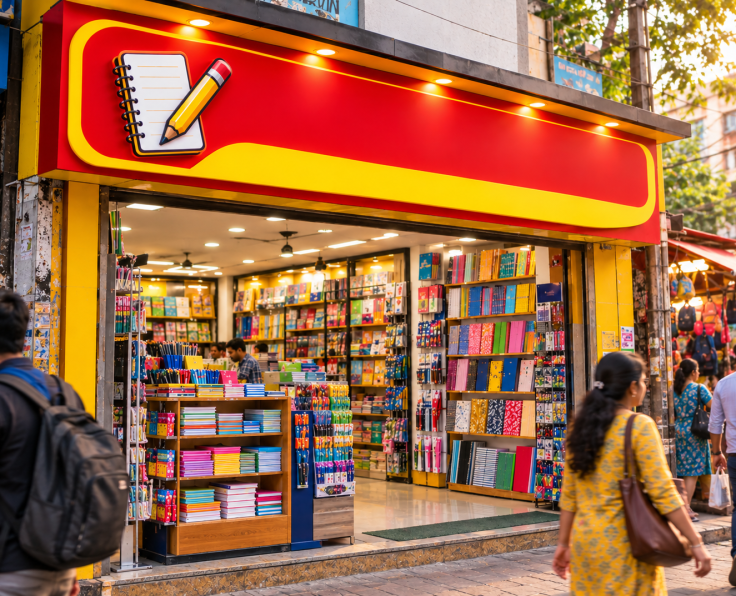
Most people decide whether to step into a stationery shop within a few seconds of walking past it, and that decision rests almost entirely on the board outside. A cluttered, faded, or generic sign gets scrolled past like a bad ad. A thoughtful stationery shop name board design does the opposite, it stops someone mid-walk and tells them exactly what’s waiting inside before they even reach the door.
If you’re opening a new store or refreshing an old one, here are ten ideas worth considering, along with what actually makes each one work.
Why Stationery Shop Board Design Deserves More Attention Than It Gets
A stationery shop sells small, everyday items, pens, notebooks, files, art supplies, but it competes for attention with bakeries, phone repair stalls, and clothing outlets on the same street. That’s the whole point of a strong stationery shop name board design, it has to communicate the category and the brand in one glance. Good signage does more than announce a name, it signals what kind of shop this is before anyone reads a single word. In the end, stationery board design isn’t just cosmetic, it’s part of how customers judge whether a shop feels organised and worth walking into.
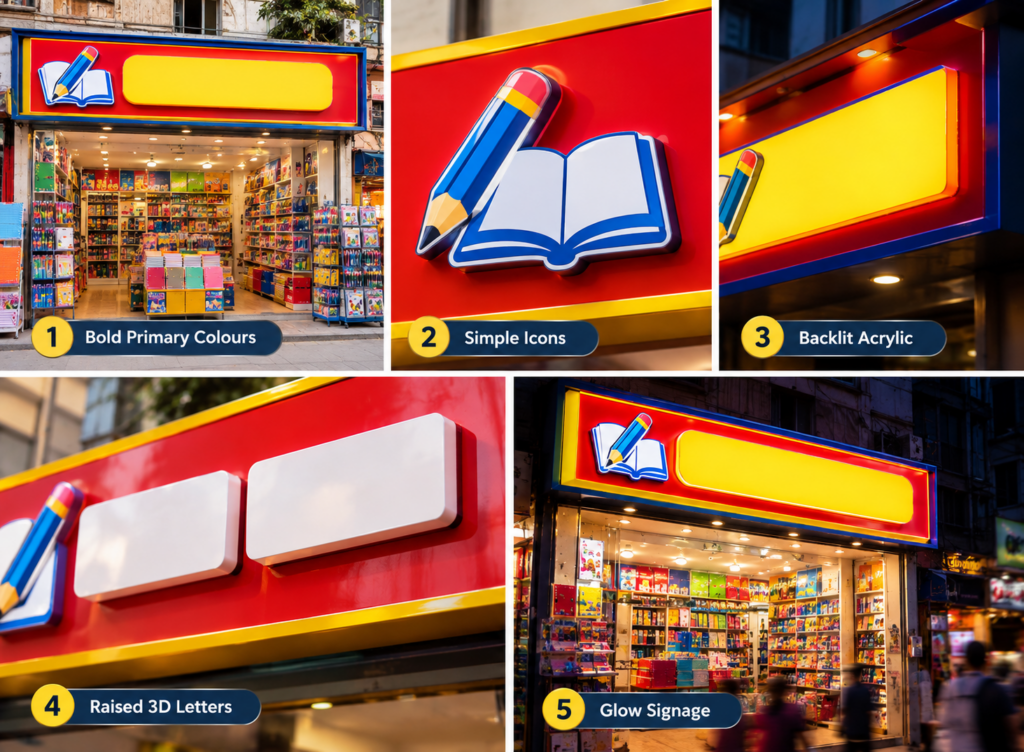
1. Bold Primary Colours for Instant Recognition
Red, yellow, and blue are the colours most people already associate with stationery and school supplies. A board using two of these as its base, rather than one flat colour, tends to catch the eye faster than muted or pastel tones, especially in busy markets.
2. Simple Icons That Say “Stationery” Without Extra Text
A small pencil, open book, or ruler icon next to the shop name removes any doubt about what’s sold inside, even for someone glancing from across the road. Icons work especially well when:
- Space on the board is limited
- The shop name itself doesn’t hint at the category
- The target customers include children and parents in a hurry
3. Backlit Acrylic for Early Mornings and Late Evenings
Stationery shops near schools often open before sunrise and stay open past dusk during exam season. A backlit acrylic panel keeps the board legible in low light without needing a separate spotlight fixture.
4. Raised 3D Letters for a Premium Storefront Look
If the shop also stocks gifts, art materials, or printing services, raised lettering signals a slightly more upscale positioning than a flat printed board. Many shop owners go with acrylic 3d letters specifically because they hold their finish for years without peeling or fading, unlike vinyl print.
5. Glow Signage for After-Dark Visibility
In markets that stay active well into the evening, a glow board keeps the shop visible from a distance without relying on ambient street lighting. A glow sign board Kolkata shopfront uses is usually a cost-effective way to stand out on a crowded lane once the sun goes down.
6. A Stationery Shop Flex Board That Lists What You Actually Sell
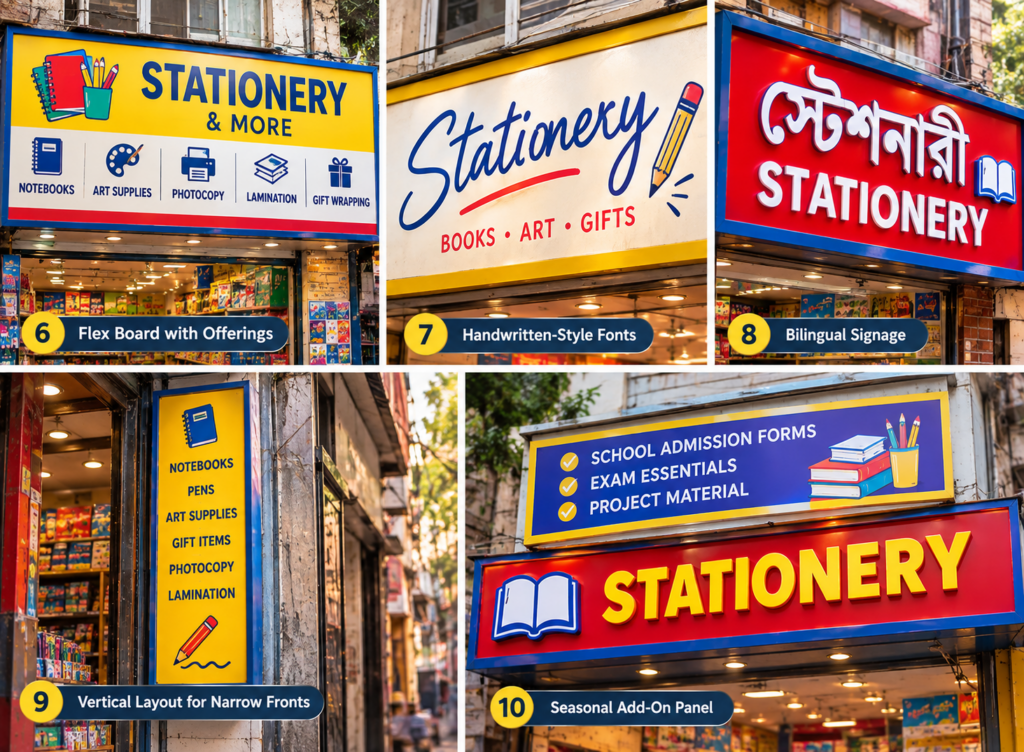
Rather than just displaying the shop name, a printed flex board can list categories directly, notebooks, art supplies, photocopy, lamination, gift wrapping. A well-planned stationery shop flex board works particularly well for shops that offer services beyond basic stationery, since it tells customers upfront rather than making them ask.
7. Handwritten-Style Fonts for a Nostalgic Feel
A script or handwriting-style font on part of the board, paired with a bolder block font for readability, gives the shop a warmer, more personal identity than a plain sans-serif label. This works well for smaller, independently run shops rather than chain-style stores.
8. Bilingual Signage for Local and Walk-In Crowds
In cities like Kolkata, adding the shop name in Bengali alongside English widens who can read it comfortably at a glance. This is a small addition that often gets overlooked but makes a real difference to older customers and local regulars.
9. Compact Layouts for Narrow Shop Fronts
Many stationery shops operate out of narrow frontages in older markets. A tall, vertical board layout, rather than a wide horizontal one, makes better use of limited wall space without shrinking the text to an unreadable size.
10. A Seasonal Add-On Panel for Admission and Exam Season
A small removable panel highlighting school admission forms, exam-time stock, or project material during peak seasons can be added above or beside the main board, then taken down once demand slows, without redesigning the whole sign.
Choosing the Right Store Board Design for a Small Shopfront
Every board decision should start with two practical questions: how visible does this need to be from the road, and how often will the content change? A shop with a fixed name and fixed offerings can go with a permanent acrylic or 3D-letter setup. A shop that rotates seasonal offers benefits more from a flex board that’s cheap to reprint. For shops working within a tight retail frontage, keeping the layout simple usually outperforms a design packed with information.
Getting It Made Right
Once you’ve settled on a direction, working with an experienced sign board manufacturer in Kolkata makes it easier to match the right material to your shop’s exposure, whether that’s direct sunlight, monsoon rain, or a narrow overhang that limits board height. Getting stationery shop name board design right usually comes down to picking one strong idea from this list and executing it well, rather than trying to combine all ten into a single board.
Frequently Asked Questions
What’s the most budget-friendly board option for a new stationery shop?
A printed flex board is usually the cheapest starting point and can be replaced easily once the business is established.
Should a stationery shop board include a phone number?
It’s optional, but including one small line with a contact number or WhatsApp helps customers ask about stock before visiting.
Is backlighting worth it for a small shop?
Yes, if the shop operates in low light hours. It costs more upfront but pays off in visibility without needing extra lighting fixtures.
How often should a stationery shop update its signage?
Most shops don’t need a full redesign more than once every few years, though a seasonal add-on panel can refresh the look without extra cost.
Does bilingual signage actually help footfall?
It generally helps with older or non-English-speaking customers who might otherwise skip a shop they can’t immediately read.