
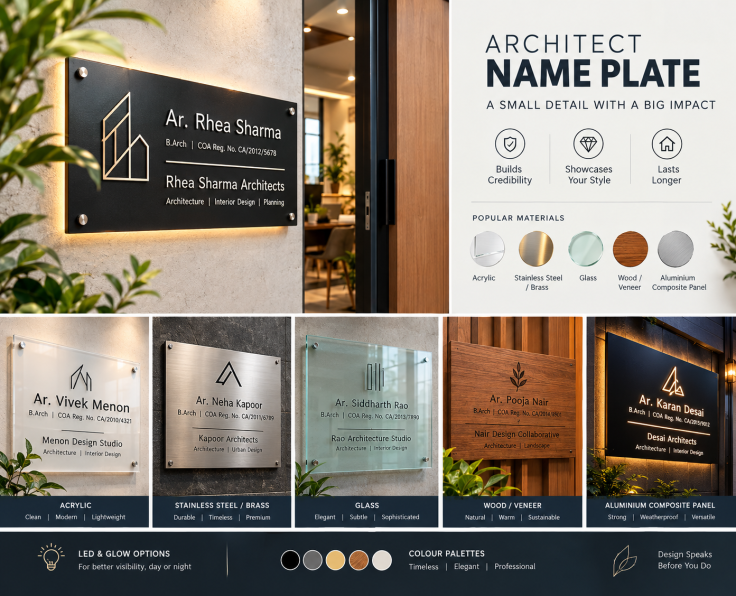
Walk into any well-designed studio and the first thing that sets the tone is rarely the furniture inside, it’s the name plate at the door. An architect name plate carries more weight than a simple label; it’s a quiet statement of how the person or firm behind it thinks about space, proportion, and detail. Getting this one small element right often matters just as much as the projects hanging on the wall behind it.
Why an Architect Name Plate Reflects More Than Just a Name
For most businesses, signage is purely functional. For architects, it’s an extension of design philosophy. An architect name plate placed at a studio entrance, or fixed at the gate of a project site, tells visitors something about the standards you hold before they’ve seen a single drawing.
This isn’t just anecdotal. A recent industry survey found that the vast majority of people connect the quality of a business’s signage with how professional and trustworthy that business appears, and a similarly high share say signage shapes whether they remember the business at all. If a plain shopfront sign can create that impression, imagine what a poorly designed board does outside a practice built entirely on visual judgement.
Popular Materials for an Architecture Name Plate
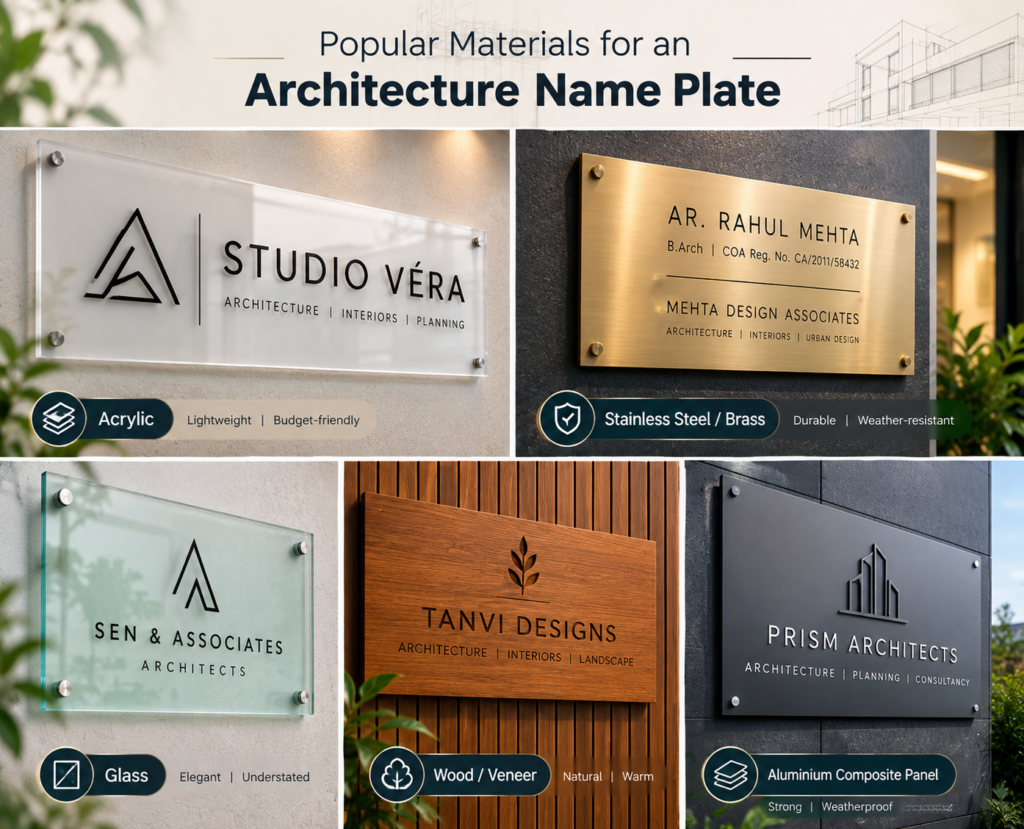
Architects tend to reach for the same handful of materials that show up in their own projects, chosen for texture, durability, and how gracefully they age.
- Acrylic – lightweight, budget-friendly, and easy to laser-cut into clean geometric shapes
- Stainless steel or brass – a brushed or matte finish that weathers well outdoors and reads as permanent
- Glass – pairs beautifully with frosted or etched lettering for studios that want an understated, almost invisible sign
- Wood or veneer – a warmer choice, common among architects working in sustainable or vernacular design
- Aluminium composite panel – increasingly used for aluminium composite panel boards, particularly for larger project-site plates that need to survive rough handling and monsoon weather
LED and Glow-Lit Options for an Architect Office Name Board
Some firms want their architect office name board to stay legible after dark, especially if the studio entrance sits inside a busy commercial complex. Backlit or edge-lit glow signboards work well here, particularly when paired with a matte black or charcoal backdrop that keeps the glow refined rather than flashy.
Design Styles Worth Considering for an Architectural Name Plate
Since architects tend to be particular about visual language, an architectural name plate usually benefits from restraint rather than decoration.
Typography and Layout Basics
Clean, geometric sans-serif fonts generally suit the profession better than script or ornamental styles. Layout should follow a clear hierarchy: name first, qualification or registration details second, firm name third, and specialization (interior design, landscape, urban planning) last if space allows. Leaving generous white space around the text keeps the board feeling deliberate instead of cluttered.
Colour Palettes That Work
- Black and white for a timeless, no-frills look
- Matte black with gold or brass lettering for a touch of understated luxury
- Charcoal or grey paired with warm LED lighting
- Natural wood tones against white or cream backgrounds
What Should an Architect Name Plate Include?
Content clarity matters as much as visual design. A well-planned architect name plate typically includes:
- Full name, often preceded by the prefix “Ar.” as used across India
- Educational qualification such as B.Arch or M.Arch (optional but common)
- Council of Architecture registration number, where applicable
- Firm or studio name
- A short tagline such as “Architecture | Interior Design” or “Planning | Landscape”
Site boards usually carry additional information, including the builder, consultant, and project timeline, since they serve a more functional purpose than a studio entrance plate.
Vastu Tips for Placing an Architectural Name Plate
Many clients in India, and quite a few architects themselves, still like to factor Vastu Shastra into placement decisions. The general guidance followed across most Vastu traditions suggests north, east, or northeast-facing walls as favourable directions for a name plate, with the left side of the main entrance considered more auspicious than the right. Height matters too: the plate is usually positioned level with the upper half of the door, and it’s best avoided directly opposite a lift or stairwell. Material choice sometimes follows the door’s direction as well, with wood favoured for wooden doors and metal recommended where the entrance faces northwest. None of this is mandatory design practice, but for an architect name plate meant for a residential or Vastu-conscious commercial client, it’s worth knowing before finalising the design.
Where to Get a Custom Architect Name Plate Made
Once you’ve settled on a direction, working with an experienced sign board manufacturer in Kolkata helps translate these ideas into a finished product without losing the precision architects care about, from font spacing to the depth of an engraved edge.
For larger site boards that need to hold up through sun, rain, and years of outdoor exposure, pairing your design with weatherproof outdoor signages Kolkata options ensures the board still looks sharp long after installation, rather than fading within a season.
An architect’s name plate is a small object carrying a large responsibility: it’s often the first and most lasting impression of a practice built on getting details right.
Frequently Asked Questions
What size should an architect name plate be?
Most studio entrance plates range between 12×8 inches and 18×12 inches, though the right size depends on door proportions and viewing distance. Site boards are typically much larger to remain readable from the road.
Which material lasts longest for an outdoor architect name plate?
Stainless steel and aluminium composite panel generally outperform wood and acrylic in direct sun and rain, making them a safer choice for exposed entrances or project sites.
Is it mandatory to include a registration number on an architect name plate?
It isn’t legally required everywhere, but many architects choose to display their Council of Architecture registration number to reinforce credibility, especially on professional or client-facing boards.
What is the best Vastu direction for a name plate?
North, east, and northeast are the directions most commonly recommended, with placement on the left side of the main entrance considered favourable.
Can LED lighting be added to an architecture name plate?
Yes, backlit or edge-lit LED options are increasingly common for studios that want their signage visible after dark without looking overly bright or commercial.