
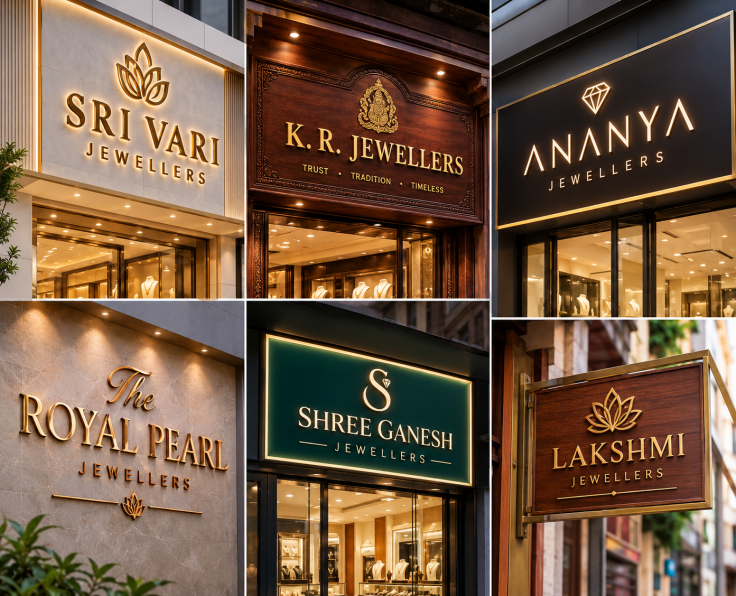
Walk down any market street in India and the shop that catches your eye first is rarely the one with the biggest window display — it’s the one with a board that actually says something about the brand. Good jewellery board design does more than announce a name; it sets the tone before a customer even steps inside. Whether you’re opening your first showroom or refreshing an old storefront, the board is often the single cheapest investment that carries the heaviest branding weight.
This guide walks through the styles, materials, and naming traditions that go into a board customers actually remember — and a few mistakes worth avoiding along the way.
Thinking about upgrading your storefront? Get in touch with us for a well-designed board that pays for itself in footfall within months — it’s worth getting the details right from day one.
Why the Board Matters More Than Most Shop Owners Assume
Jewellery is an emotional purchase. Buyers are trusting a shop with gold, diamonds, and family savings, so the signage has to communicate credibility at a glance — clean lettering, a stable structure, and lighting that doesn’t wash out at night. A cluttered or dated board quietly signals a cluttered or dated business, even if the inventory inside says otherwise.
Popular Styles for Jewellery Boards
Acrylic and 3D Letter Boards
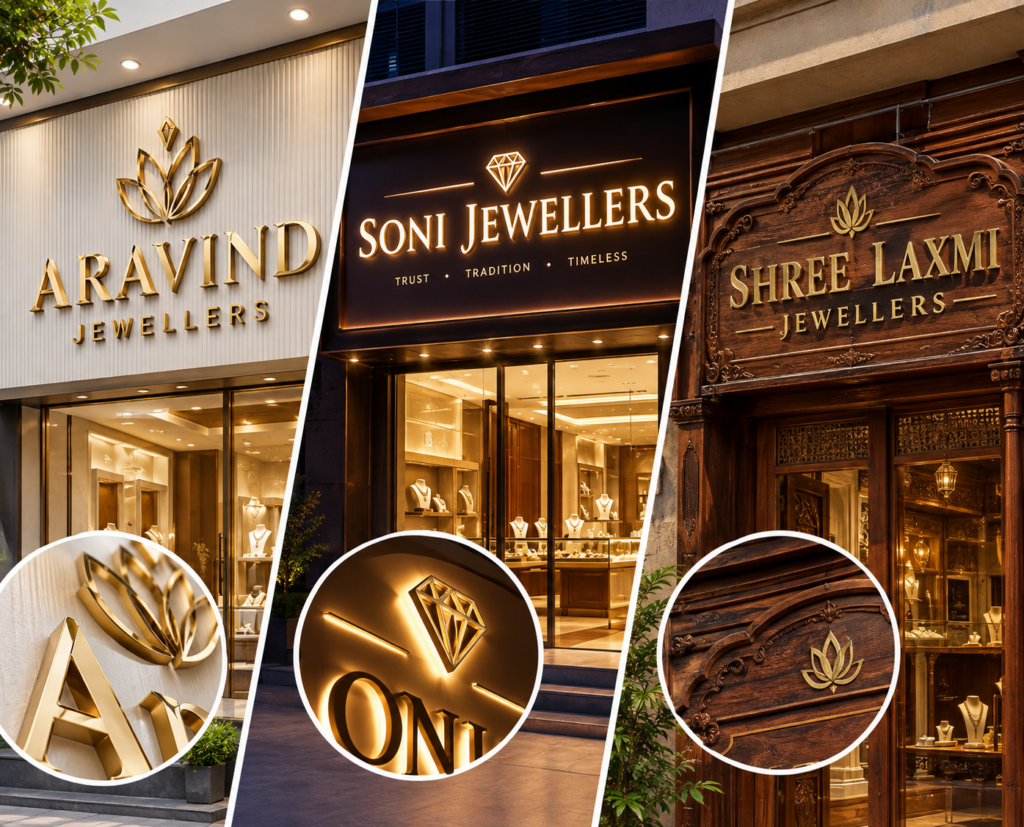
This is the style most modern jewellery brands lean toward. Raised letters — often finished in gold, rose gold, or brushed metal tones — catch light beautifully and photograph well, which matters more than ever with customers sharing storefront photos on social media. Acrylic 3D letters work particularly well for brands that want a premium, boutique feel without the maintenance that comes with metal fabrication.
Front-Lit Signage Boards
For shops that stay open into the evening, a front-lit sign board keeps the storefront visible and inviting after sunset. The even glow across the face of the board tends to suit jewellery shops especially well, since it mimics the warm, showcase-style lighting already used inside.
Traditional Wood and Brass Boards
Heritage jewellers — the kind that have been in a family for two or three generations — often stick with carved wood or brass-etched boards. These don’t compete for attention the way illuminated signage does, but they carry a sense of permanence that newer materials can’t fake.
Best Materials for Jewellery Shop Name Board Design
Material choice affects both durability and how premium the shop reads from the street. Common options include:
- Acrylic — lightweight, weather-resistant, and easy to illuminate from behind
- Brass and copper — classic, ages well, suited to traditional branding
- Stainless steel — modern, low-maintenance, holds up in coastal or humid climates
- Wood with gold-leaf lettering — evokes old-world craftsmanship
- LED-backlit panels — ideal for shops relying on night footfall
A thoughtful jewellery shop name board design usually blends two materials — say, brass lettering on an acrylic base — to get both texture and visibility right. This is also where a good jewellery name board design earns its keep: the right material pairing makes lettering legible in daylight and glare-free after dark.
Choosing Colours, Fonts, and Layout
A few points that consistently separate boards that work from ones that don’t:
- Stick to two colours maximum on the primary board — gold, maroon, and deep green read as “trustworthy jewellery brand” more reliably than bright, busy palettes
- Serif or slightly ornamental fonts suit traditional shops; clean sans-serif fonts suit contemporary or bridal-focused brands
- Keep the logo and shop name balanced — an oversized logo with a squeezed name looks amateurish from a distance
- Leave breathing room around the text; a cramped board is harder to read while driving or walking past
Traditional Names for Jewelry Shops: Where They Come From
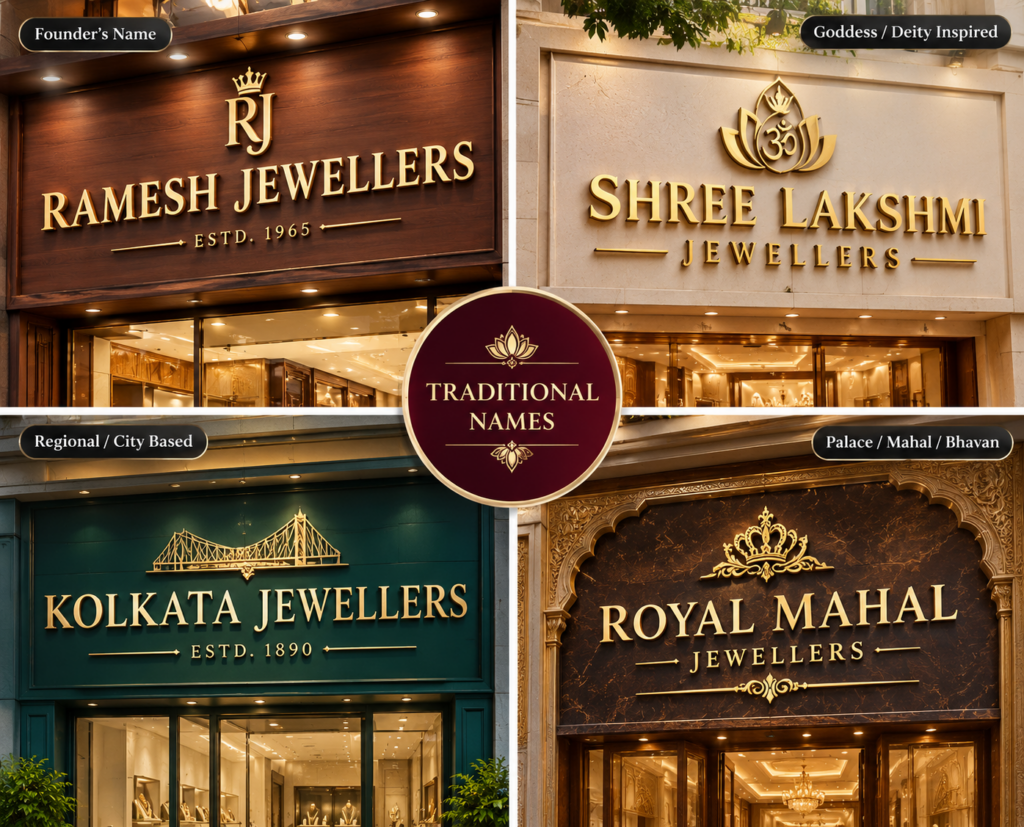
Naming conventions in this trade are older than most of the shops themselves, and they still shape how a board gets designed. A few recurring patterns:
- Names built on the founder’s name — “Ramesh Jewellers,” “Choudhury & Sons” — signalling a family-run legacy
- Goddess and deity-inspired names — many jewellers reference Lakshmi, the goddess associated with wealth and prosperity, directly in the shop name
- Regional or city-based names — anchoring the shop to a locality builds local trust over time
- Words like “Palace,” “Mahal,” or “Bhavan” — used to suggest scale and grandeur, common among larger showrooms
If you’re picking a name today, it’s worth checking how it will actually look once translated into board form — some names that read beautifully in speech become awkward once stretched across three-dimensional lettering.
Jewellery Shop Board Design by Type of Store
Boutique or single-counter shops tend to do well with compact acrylic boards, one accent colour, and a simple wordmark — the goal is elegance, not scale.
Large showroom chains usually invest in front-lit or backlit boards with consistent branding across every branch, since recognisability matters more than individual character.
Heritage stores often keep the original wood or brass board and pair it with subtle, modern lighting — a small addition that respects the legacy while improving visibility.
Finding the Best Sign Board for Your Store
There’s no single “correct” style — the right board depends on your shop’s size, location, footfall pattern, and how traditional or modern your brand wants to feel. What stays constant is the need for durable materials, legible typography, and lighting suited to your operating hours.
If you’re comparing options, it helps to see a few finished examples before committing to a direction — browsing the best sign board styles available can narrow things down faster than guessing from photos alone.
Ready to design a board that matches your showroom’s character? Get in touch with Shree Shyam Signages for a design consultation tailored to your shop’s size, location, and brand.
Frequently Asked Questions
What is the best material for a jewellery board design?
Acrylic combined with brass or metallic lettering is currently the most popular choice — it balances durability, visibility, and a premium finish without heavy upkeep.
What are some traditional names for a jewellery shop?
Common patterns include founder-based names, names referencing goddesses like Lakshmi, city or locality-based names, and grandeur-suggesting words like “Palace” or “Bhavan.”
Does LED lighting work well for jewellery shop signage?
Yes — LED-backlit boards are especially effective for shops with strong evening footfall, since they keep the storefront legible and inviting after dark.
How big should a jewellery shop board be?
Size depends on the shop’s frontage and viewing distance from the street; a board that’s easily readable from at least 15–20 metres away generally works well for most storefronts.
What factors affect the cost of a jewellery board?
Material choice, board size, lighting type, and installation complexity are the main cost drivers — acrylic and LED elements typically cost more than plain wood or brass but reduce long-term maintenance.