
Restaurant Digital Signage: How to Choose the Right Indoor Screens
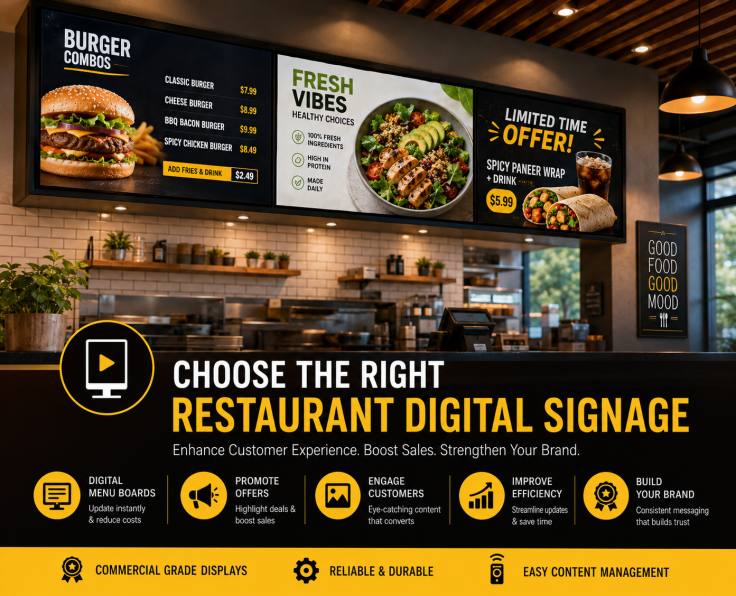
In today’s competitive food service industry, restaurant digital signage has become more than just a modern display solution. Restaurants of all sizes are using digital screens to enhance customer experience, showcase promotions, streamline menu updates, and strengthen brand identity.
However, selecting the right screen is not as simple as buying the largest display available. Factors such as screen size, resolution, placement, content management, and durability all play a crucial role in the effectiveness of your signage strategy. This guide will help you choose the ideal indoor digital signage screens for your restaurant while maximizing your return on investment.
Why Restaurant Digital Signage Matters
Modern diners expect visually engaging experiences. Digital screens help restaurants communicate information more effectively than traditional printed signs.
Benefits include:
- Real-time menu updates
- Improved customer engagement
- Faster promotion of special offers
- Better brand consistency
- Reduced printing costs
- Enhanced ordering experience
As the restaurant industry continues to embrace digital transformation, the adoption of digital displays is growing rapidly across the globe. Recent research on the digital signage industry highlights how businesses are leveraging interactive screens, real-time content updates, and data-driven customer engagement strategies to enhance user experiences and improve operational efficiency. According to the latest findings from the Digital Signage Market Report, demand for advanced display technologies is expected to continue rising as businesses seek more effective communication solutions.
Understanding Different Types of Digital Signage for Restaurants
Before selecting a display, it’s important to understand the common applications of digital signage for restaurants.
Digital Menu Boards
One of the most popular uses of restaurant screens is digital menu boards.
These displays allow restaurants to:
- Update pricing instantly
- Highlight best-selling items
- Promote seasonal offers
- Display high-quality food images
- Reduce menu management costs
Restaurants that frequently update their menus often benefit the most from digital menu solutions.
Promotional Displays
These screens showcase:
- Combo deals
- Loyalty programs
- Limited-time offers
- New product launches
Strategically placed promotional screens can influence purchasing decisions while customers wait.
Brand Communication Screens
Many restaurants also use screens to share:
- Brand stories
- Customer testimonials
- Sustainability initiatives
- Social media content
This helps strengthen customer trust and engagement.
Choosing the Right Screen Size
Screen size directly affects visibility and customer experience.
Small Restaurants
For compact dining spaces:
- 32-inch to 43-inch displays are often sufficient.
- Ideal for counter menus and promotional content.
Medium-Sized Restaurants
For larger customer areas:
- 43-inch to 55-inch displays work effectively.
- Suitable for menu displays and customer engagement screens.
Large Restaurants and Food Courts
For high-traffic locations:
- 55-inch to 75-inch displays provide better visibility.
- Multiple screens may be required.
The screen should be readable from the farthest customer viewing distance.
Select the Right Resolution
Image quality significantly impacts customer perception.
Full HD (1080p)
Suitable for:
- Standard menu displays
- Promotional content
- Budget-conscious restaurants
4K Resolution
Ideal for:
- Premium dining establishments
- High-end food photography
- Large-format displays
The sharper visuals create a more professional and attractive presentation.
Consider Screen Brightness
Restaurants often have varying lighting conditions.
When evaluating indoor digital signage, choose screens with adequate brightness levels.
Recommended brightness:
- 300–500 nits for standard indoor environments
- 500+ nits for areas with strong ambient lighting
Proper brightness ensures content remains visible throughout the day.
Evaluate Content Management Capabilities
A powerful content management system (CMS) makes signage more effective.
Look for systems that allow:
- Remote content updates
- Scheduling promotions
- Multi-location management
- Real-time menu changes
- Integration with POS systems
Efficient content management helps restaurants respond quickly to operational needs.
Placement Strategies for Maximum Impact
Even the best screen will underperform if placed incorrectly.
Menu Ordering Areas
Position screens where customers naturally focus while ordering.
This is the ideal location for:
- digital menu boards
- Upselling promotions
- Combo offers
Waiting Areas
Customers waiting for orders are highly receptive to promotional messaging.
Display:
- New menu items
- Customer reviews
- Brand content
Dining Areas
Use screens sparingly to avoid overwhelming diners.
Content can include:
- Brand stories
- Community involvement
- Upcoming events
Durability and Commercial-Grade Displays
Consumer televisions may seem cost-effective initially, but they are not designed for long operational hours.
Commercial displays offer:
- Longer lifespan
- Better heat management
- Continuous operation capabilities
- Enhanced reliability
Restaurants operating for extended hours should prioritize commercial-grade solutions.
Integrating Indoor Business Wall Signs with Digital Displays
Successful restaurant branding often combines digital and static signage.
Many businesses pair indoor business wall signs with digital displays to create a cohesive customer experience.
While digital screens play a crucial role in modern restaurant environments, they are most effective when combined with strong visual branding elements. Many restaurants complement their digital displays with innovative indoor signage to create a cohesive and memorable atmosphere. Branded wall graphics, illuminated signs, and customized interior displays help reinforce the restaurant’s identity while enhancing the overall customer experience.
This combination helps reinforce brand identity throughout the customer journey.
Creating a Complete Wayfinding Experience
In larger restaurants, food courts, and hospitality venues, navigation is equally important.
In larger restaurants, food courts, and multi-level dining spaces, customer navigation can significantly impact the overall dining experience. Clear wayfinding solutions work alongside digital screens to guide visitors toward ordering counters, pickup zones, restrooms, and seating areas. Investing in professionally designed signage from a reliable directional sign board maker can help reduce confusion and improve customer flow, particularly during peak business hours.
Together, digital displays and wayfinding signs create a seamless customer experience.
Budget Considerations
When budgeting for restaurant digital signage, consider:
- Display hardware
- Installation costs
- Content management software
- Maintenance
- Future scalability
Instead of focusing solely on upfront costs, evaluate long-term value and operational efficiency.
Common Mistakes to Avoid
Many restaurants make avoidable mistakes when investing in signage.
Avoid:
- Choosing screens based solely on price
- Ignoring viewing distance
- Using low-resolution displays
- Overcrowding screens with content
- Neglecting content updates
- Purchasing non-commercial displays for heavy usage
Proper planning ensures better performance and customer engagement.
Selecting the right restaurant digital signage solution requires balancing functionality, visibility, branding, and long-term reliability. From choosing the appropriate screen size and resolution to implementing effective digital menu boards and integrating indoor business wall signs, every decision contributes to the overall customer experience.
The best digital signage for restaurants not only improves communication but also enhances brand recognition, boosts sales opportunities, and creates a modern dining environment. By investing in the right indoor digital signage solution, restaurants can stay competitive while delivering a more engaging experience for their customers.
FAQs
1. What is restaurant digital signage?
Restaurant digital signage refers to digital display screens used for menus, promotions, advertisements, and customer communication within restaurants.
2. Are digital menu boards better than traditional printed menus?
Yes. Digital menu boards allow instant updates, reduce printing costs, and provide more engaging visual presentations.
3. What screen size is best for restaurant digital signage?
The ideal size depends on viewing distance and restaurant layout. Most restaurants use displays ranging from 32 inches to 55 inches.
4. How long do commercial digital signage screens last?
Commercial-grade displays typically last between 50,000 and 100,000 operating hours, depending on usage conditions.
5. Can restaurant digital signage integrate with POS systems?
Yes. Many modern signage platforms integrate with POS systems to automate menu and pricing updates.
6. How often should restaurant digital signage content be updated?
Promotions, menu items, and seasonal offers should be updated regularly to keep content fresh and relevant.
7. Is indoor digital signage suitable for small restaurants?
Absolutely. Even small restaurants can benefit from digital menu boards and promotional displays to improve customer engagement and operational efficiency.
8. What content works best on digital signage for restaurants?
High-quality food images, menu items, promotions, combo offers, customer reviews, and brand storytelling content generally perform best.