
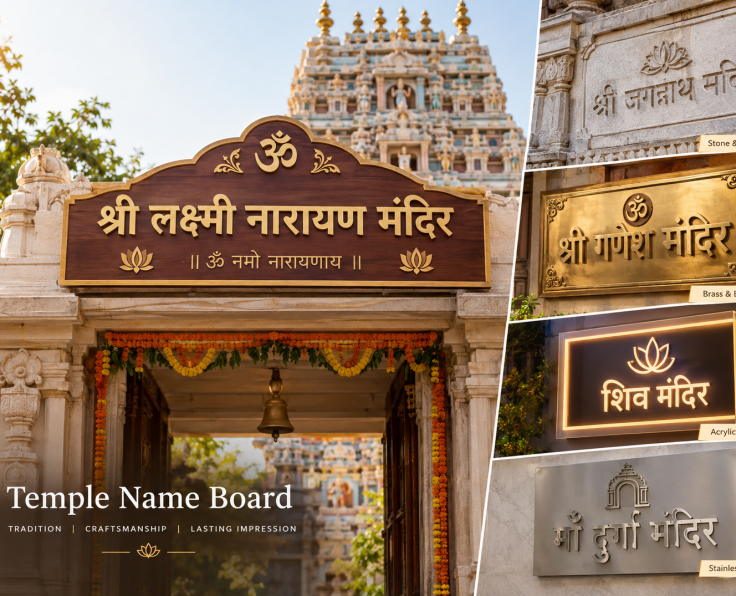
Walk past any mandir in India and the first thing that greets you, before the deity, before the priest, before the bells, is usually the temple name board at the entrance. It tells devotees where they are, what deity is enshrined inside, and often carries a line of scripture or a founding date. A well-designed temple name board does more than announce a name; it sets the tone for everything a visitor feels on stepping through the gate. Whether you’re commissioning one for a neighbourhood shrine or a large pilgrimage site, knowing the types, materials, and costs involved helps you choose something that lasts.
What Is a Temple Name Board and Why Does It Matter?
A temple name board is usually the first physical element a visitor notices, often placed above the main gate or gopuram entrance. Beyond identification, it communicates the sanctity and visual character of the space inside — and this matters more given the pace at which India’s spiritual tourism sector has grown, bringing first-time visitors who rely on clear signage to navigate unfamiliar complexes. The same logic applies to a masjid name plate, which serves the same purpose for a mosque — guiding visitors and displaying Arabic or Urdu calligraphy that reflects the building’s character. Both are functional signs, but for a place of worship, craftsmanship carries real weight.
Types of Temple Name Board Designs in India
Traditional Mandir Sign Board Styles
A traditional mandir sign board leans on materials and motifs used for centuries: carved stone, hand-painted wood, and cast brass lettering set against a plain background. Common features include:
- Sanskrit or regional-language text, carved or embossed
- Motifs such as the om symbol, lotus, or kalash
- Natural finishes — stone, teak, or aged brass — over glossy paint
- Minimal back-lighting, relying instead on ambient or spotlight illumination
These boards suit heritage temples and trusts that want the signage to blend into centuries-old architecture rather than stand apart from it.
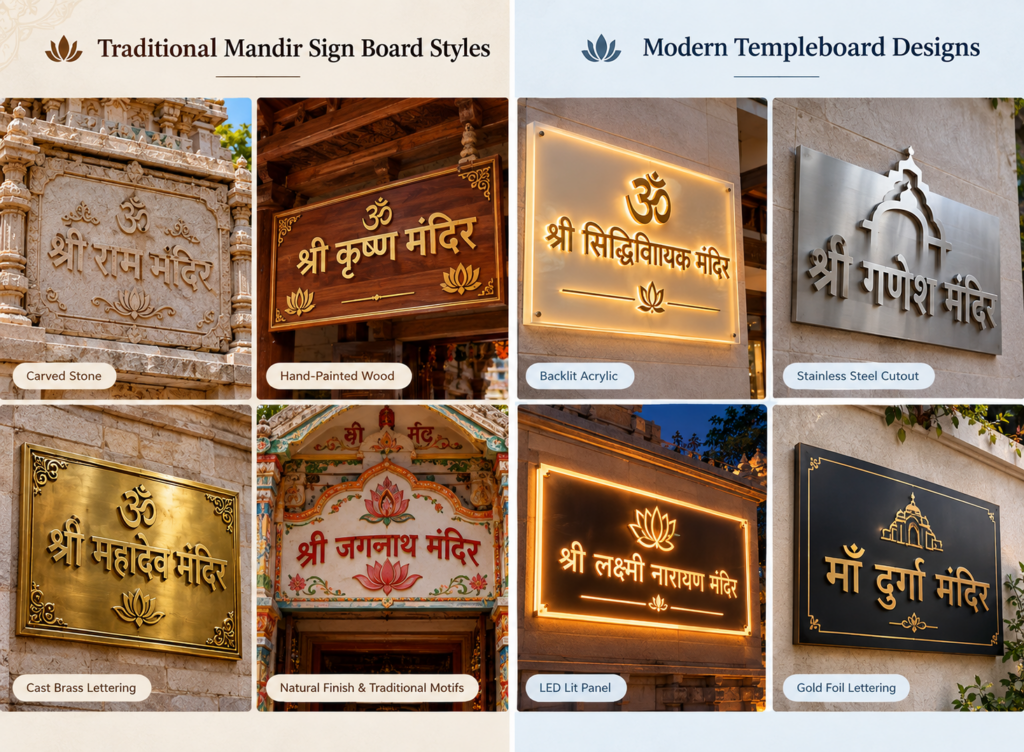
Modern Templeboard Designs
A modern templeboard trades hand-carving for CNC-cut acrylic, stainless steel, or LED-lit panels, materials that hold up better against India’s humidity and monsoon rain while still looking dignified. Many temple trusts today favour illuminated options similar to the glow signboards kolkata used by commercial establishments, adapted with warmer tones and temple-appropriate typography so the board reads as sacred rather than commercial. Backlit acrylic, gold-foil lettering, and stainless-steel cutouts are now common on temples built or renovated in the last decade.
How a Masjid Name Plate Differs from a Temple Board
A masjid name plate and a mandir sign board share the same basic job — identification and welcome — but the content, script, and ornamentation differ. Masjid signage typically uses Arabic calligraphy, crescent motifs, and geometric patterns rather than figurative carving, with Urdu or Arabic script often running alongside the local language. The fabrication process, materials, and installation logistics, however, are largely identical across both.
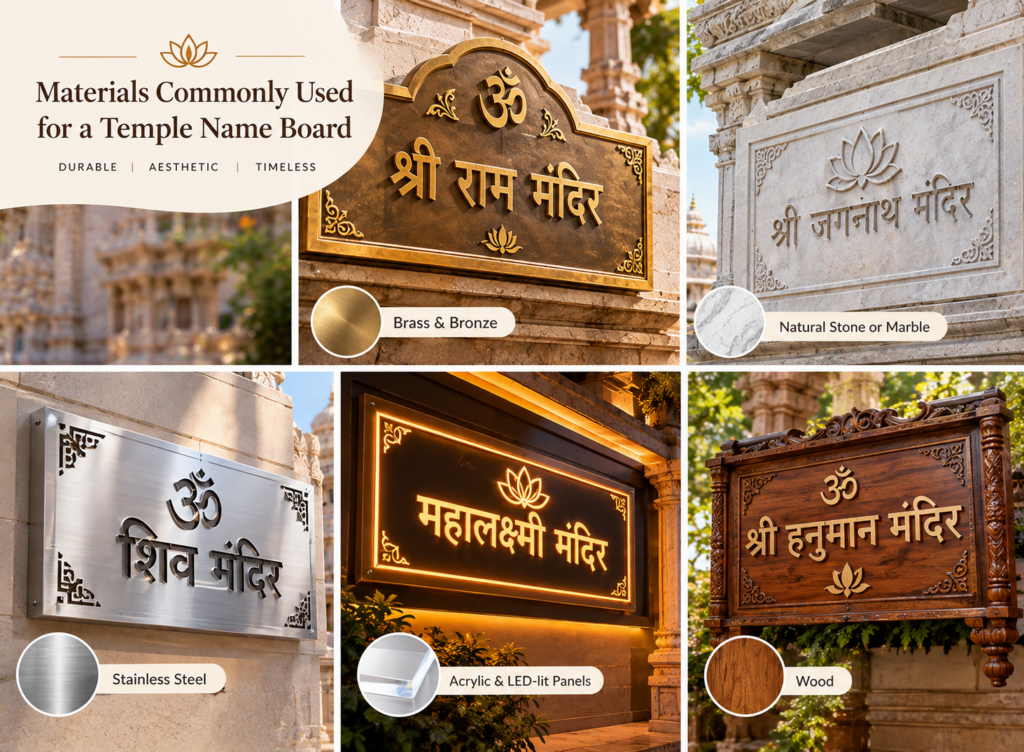
Materials Commonly Used for a Temple Name Board
Material choice determines how a temple name board survives sun, rain, and years of ritual smoke from lamps and incense. The most common options include:
- Brass and bronze — traditional, associated with temple aesthetics, though it needs periodic polishing
- Natural stone or marble — carved or sandblasted lettering, extremely durable, well suited to stone-clad temples
- Stainless steel — increasingly popular for its strength and low upkeep; research into the corrosion-resistant properties of stainless steel explains why grade 316 in particular holds up in humid, coastal, or heavily polluted areas
- Acrylic and LED-lit panels — used for a modern front lit sign board look, giving even illumination across the text after dark
- Wood — warm and traditional, but needs weatherproofing or indoor placement
For boards mounted at the main entrance or compound wall, weather exposure matters more than it does for indoor signage, which is why manufacturers usually treat these as outdoor signages requiring UV-stable coatings, powder coating, or anti-corrosive layers, regardless of the base material chosen.
What Affects the Cost of a Temple Name Board in India
There is no single price tag for a temple name board — the final quote shifts based on several variables:
- Size and board area — larger boards need more raw material and stronger structural support
- Material — brass and stone typically cost more than acrylic or painted MS sheet
- Lettering technique — hand-carved or embossed text costs more than printed or laser-cut lettering
- Lighting — a backlit or LED-illuminated templeboard adds wiring, drivers, and installation charges
- Script complexity — multilingual text, Sanskrit calligraphy, or Arabic script on a masjid name plate can extend design and fabrication time
- Installation height — gopuram-level or elevated boards need scaffolding and extra labour
- Finish — gold foil, antique brass plating, or a mirror-polish finish adds to the base cost
Sharing exact dimensions, script, and finish preferences with a manufacturer is the only reliable way to get an accurate cost for your specific board.
How to Choose the Right Mandir Sign Board for Your Temple
Before finalising a mandir sign board, work through a few practical questions. Does it need to survive direct monsoon exposure, or sit under a covered entrance? Will it mostly be read by day, or does the temple stay lit after dark? Should it match an existing stone or wood facade, or suit a newly built structure? Many trusts also position the board in line with Vastu Shastra principles, which guide auspicious placement and orientation for entrance elements. A good manufacturer asks these questions before recommending a material and lighting setup, rather than pushing one standard design — and physical samples are worth seeing in person, since brass, stone, and acrylic all catch light differently than they do in a photograph.
Frequently Asked Questions
Q1. What is the best material for a temple name board?
Brass and natural stone remain the most traditional choices, while stainless steel and acrylic are gaining ground for their durability and lower maintenance.
Q2. How long does a temple name board typically last?
With the right material and weatherproofing, brass, stone, or stainless-steel boards can last several decades with only occasional cleaning or repolishing.
Q3. Is a masjid name plate made differently from a temple board?
The core materials and fabrication process are similar; the real difference lies in script, calligraphy style, and ornamental motifs.
Q4. Can an existing templeboard be upgraded with LED lighting?
Yes — most stone, acrylic, or metal boards can be retrofitted with edge-lit or backlit LED strips without replacing the entire board.
Q5. Does the size of a mandir sign board need approval from temple trusts?
Often, yes. Larger or elevated boards may need trust or local authority sign-off, especially at heritage-listed temples.